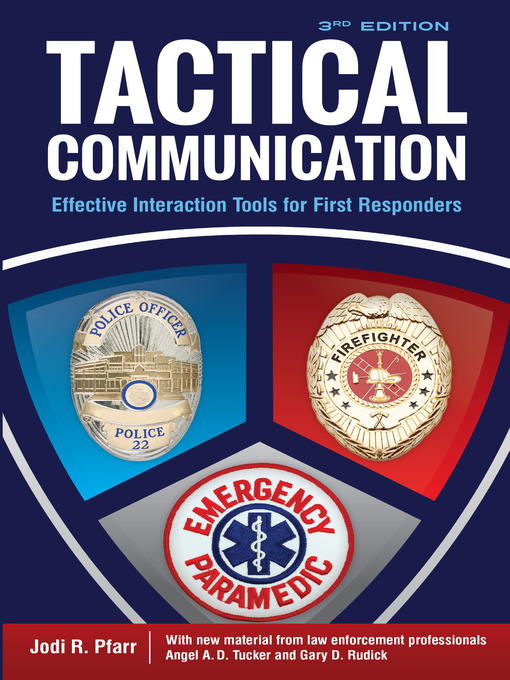
Understanding and positively interacting with people encountered on calls is the key to safe, successful outcomes for first responders. What you say and how you say it will directly impact citizen responses to questions, commands, and even your authority. The difference between first responders’ worldviews and those of people in under-resourced service areas poses a great challenge. For people in poverty, hidden rules governing behavior, communication, and more are often vastly different from those of middle class responders. Tactical Communication provides responders with practical tools to foster safe, effective interactions with citizens from poverty, middle class, and wealth. Police and fire department pilot projects based on Tactical Communication have shown outstanding results. This third edition of Tactical Communication includes: New contributions and insights from respected career; First responders Mental models of people in poverty, middle class, and wealth; Effective verbal and nonverbal communication tools and techniques; Stigma, impacts, and care for responders and people in poverty with PTSD; Tools to increase safety and reduce community complaints.
- Core Curriculum I Persona y autoconocimiento
- Clubes de lectura
- Core Curriculum II Persona y afectividad
- Core Curriculum V Persona y retos actuales
- Core Curriculum III Persona y trascendencia
- Core Curriculum IV Persona y su actuar
- Sugerencias literarias
- Audiolibros
- Interés general
- Ebooks Universidad de La Sabana
- Revistas de Negocios y Finanzas
- Revistas de Actualidad y Política
- Revistas de Ciencia
- See all universidad de la sabana collections collections